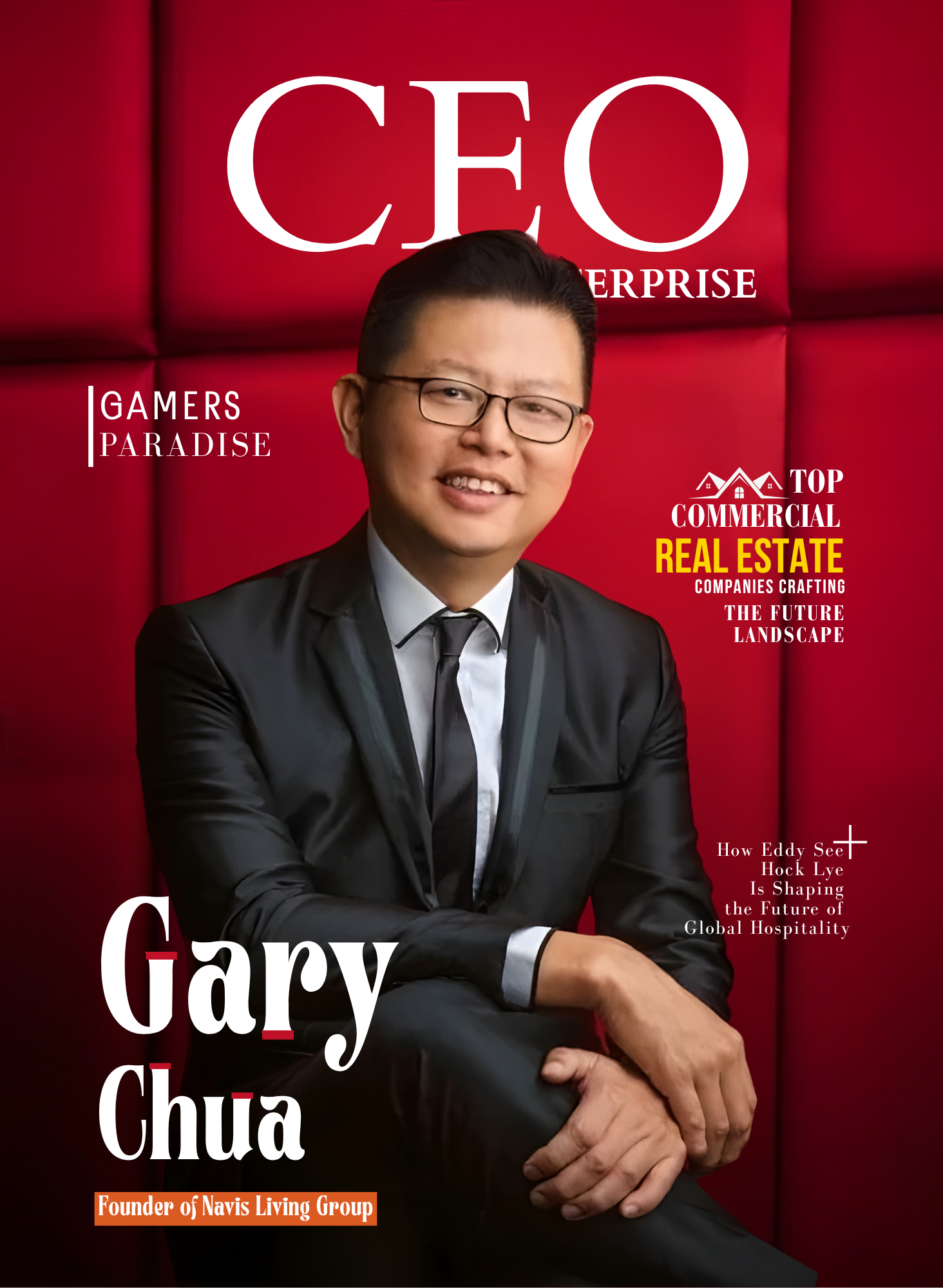
In the high-performance world of real estate, success is often measured by individual sales achievements. Yet, for a select group of industry leaders, true impact is defined not by personal accolades, but by the ability to scale people, systems, and culture. Gary Chua, Co-Founder of Navis Living Group, exemplifies this…

In the high-performance world of real estate, success is often measured by individual sales achievements. Yet, for a select group of industry leaders, true impact is defined not by personal accolades, but by the ability to scale people, systems, and culture. Gary Chua, Co-Founder of Navis Living Group, exemplifies this shift from top-performing agent to one of the most influential mentors and team builders in Singapore’s real estate ecosystem.
With more than two decades of experience, Chua’s journey reflects a deliberate transition from personal success to organizational leadership one that offers valuable lessons for B2B leaders navigating growth, talent development, and long-term scalability.
Early Career: Mastering the Fundamentals of Sales
Gary Chua entered the real estate industry in 2000 at the age of 30, quickly establishing himself as a high-performing salesperson. Within his first five years, he consistently ranked among the Top 50 achievers, demonstrating both technical expertise and a deep understanding of client needs.
This early phase of his career provided more than financial success it gave him firsthand insight into the challenges faced by agents at different stages of their careers. From prospecting and negotiation to closing deals, Chua developed a comprehensive understanding of the industry’s operational realities.
However, unlike many top producers who continue to focus on individual performance, Chua made a pivotal decision that would define his career trajectory.
A Strategic Pivot: From Sales to Mentorship
In 2005, Chua shifted his focus away from personal sales to concentrate on mentoring and developing other agents. This decision came at a cost he stepped back from his own revenue generation but it was driven by a larger vision: building a scalable platform for talent development.
This transition highlights a critical principle in B2B leadership: sustainable growth often requires short-term trade-offs. By investing in people rather than immediate profits, Chua laid the foundation for a long-term, high-impact business model.
Over time, his mentorship approach began to yield results. Numerous agents under his guidance achieved top-producer status, with some generating over S$1 million in annual commissions.
More importantly, he developed a repeatable system for training, coaching, and scaling performance turning individual success into organizational capability.
Building Navis Living Group: Scaling a Vision
The defining milestone in Chua’s career came in 2017, when he co-founded Navis Living Group alongside several industry partners.
What began as a small founding team quickly evolved into one of the fastest-growing real estate groups in Singapore. Within just a few years, the organization expanded from five co-founders to more than 1,000 agents, demonstrating exceptional scalability in a highly competitive market.
Today, Navis operates as a large and dynamic network of real estate professionals, known for its strong culture, training infrastructure, and performance-driven environment.
For B2B observers, this growth trajectory underscores the importance of three key elements:
- Structured training systems
- Strong leadership alignment
- A culture of collaboration and shared success
A People-First Operating Model
At the core of Chua’s leadership philosophy is a belief that real estate is fundamentally a people business. This perspective shapes how Navis Living Group operates from recruitment and training to performance management.
The organization places significant emphasis on continuous learning, offering structured programs such as advisory sales training, mentorship frameworks, and personal development initiatives.
This approach ensures that agents are not only equipped with technical skills but also develop the mindset and resilience needed to succeed in a demanding industry.
Unlike traditional brokerage models that prioritize transactions, Navis focuses on long-term agent development. The result is a more sustainable business model one where growth is driven by capability building rather than short-term sales spikes.
Leveraging Culture, Training, and Technology
One of the distinguishing features of Navis Living Group is its integrated approach to growth. Under Chua’s leadership, the organization combines:
- Culture: A collaborative, supportive environment that encourages knowledge sharing
- Training: Structured programs designed to accelerate learning and performance
- Technology: Tools and platforms that enhance productivity and decision-making
This combination creates a competitive advantage in an industry where differentiation is often difficult to achieve.
By investing in these three pillars, Chua has positioned Navis as more than just a sales organization it functions as a talent incubator within the real estate sector.
Leadership Lessons for B2B Organizations
Gary Chua’s journey offers several insights that extend beyond real estate and into broader B2B leadership:
1. Scale Through People, Not Just Performance
Individual success can drive short-term results, but scalable growth requires building systems that enable others to succeed.
2. Invest in Capability Building
Training and mentorship are not costs they are strategic investments that generate long-term returns.
3. Create a Strong Organizational Culture
A shared vision and collaborative environment are critical for sustaining growth, especially in large, distributed teams.
4. Embrace Strategic Trade-Offs
Chua’s decision to step away from personal sales highlights the importance of prioritizing long-term impact over immediate gains.
Redefining Success in Real Estate
Today, Gary Chua continues to focus on developing future generations of real estate professionals while expanding the influence of Navis Living Group.
His leadership reflects a broader evolution within the industry one where success is no longer defined solely by transactions, but by the ability to build people, systems, and sustainable businesses.
For B2B leaders, his story serves as a compelling example of how vision, discipline, and a people-first approach can transform not just an organization, but an entire segment of the market.