
In the high-stakes world of professional services, where tenure often dictates authority, Vishesh C. Chandiok, CEO of Grant Thornton Bharat LLP, represents a powerful counternarrative. As a modern leader who has steered the firm through significant transformation, Chandiok’s journey is less about linear progression and more about catalytic growth, perfectly…
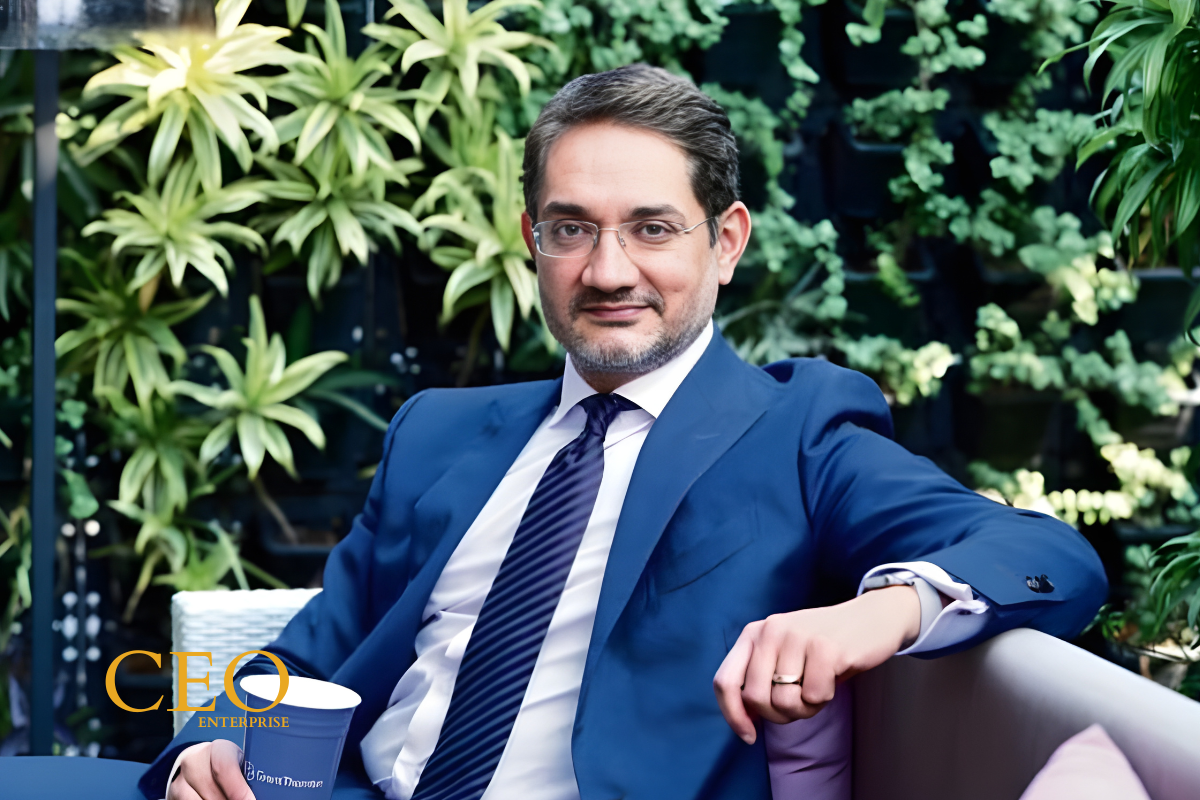
In the high-stakes world of professional services, where tenure often dictates authority, Vishesh C. Chandiok, CEO of Grant Thornton Bharat LLP, represents a powerful counternarrative. As a modern leader who has steered the firm through significant transformation, Chandiok’s journey is less about linear progression and more about catalytic growth, perfectly aligned with India’s own dynamic economic rise.
Educated in the UK as a Chartered Accountant from the Institute of Chartered Accountants in England and Wales (ICAEW), Chandiok returned to India to play a pivotal role in building Grant Thornton’s presence. His ambition was never to merely mimic the structure of the Big Four global firms, but to build a truly Indian professional services giant-one that is locally rooted yet globally integrated.
A Seat at the Global Table
Chandiok’s influence stretches beyond India’s borders. In 2016, at a relatively young age, he was elected to the Global Board of Governors of Grant Thornton International Limited (GTIL), becoming the youngest member to hold this principal decision-making position. This appointment was a clear acknowledgment of his success in delivering substantial growth for the firm in the high-growth Indian market and his strategic vision for emerging economies.
More recently, he was Initiated as the first Indian council member, residing overseas, into the ICAEW Council, a testament to his exceptional contribution and the growing global recognition of Indian professionals in accounting and finance.
Championing the ‘Indian Big Four’ A key theme in Chandiok’s recent public discourse and a primary focus of his advocacy is the urgent need to reform India’s regulatory landscape to enable the creation of ‘Indian Big Four’ or ‘Indian Big 10’ audit and consulting firms.
He argues that India needs its own, home-grown professional giants to stand up for Indian capital and to have a stronger voice in global standard-setting. His proposals for reform centre on three critical areas:
Multidisciplinary Partnerships: Allowing non-CAs (like cybersecurity or SAP experts) to become partners to build cross-functional capacity, a practice common globally.
Capital Investment: Enabling domestic firms to raise external capital, such as from private equity, to invest in technology, talent, and global expansion.
Demand Creation: Creating a policy environment (like phased joint audits for top companies) that encourages demand and support for large Indian firms.
Chandiok sees this as not just a matter of protectionism, but of correcting structural imbalances to foster a resilient ecosystem capable of supporting India’s ambitious growth trajectory toward a ‘Vibrant Bharat’.
Leadership Through Culture and Ethics
What truly distinguishes Chandiok is his focus on leadership through culture and accountability, He has openly shared how his leadership evolved, particularly no ling the lesson leamed from the 2008 financial crisis, where a focus on short-term survival aver employee morale proved detrimental, This led to a fundamentally different, people-first approach during the 2020 pandemic, prioritizing jab security and well-being:
His leadership has transformed Grant Thornton Bharat into a firm recognized as a ‘Great Place to Work-o firm built on trust, transparency, and a commitment to ethical leadership. For Chandiok, technical expertise is foundational, but true success hinges on the integrity and culture Instilled in the firm’s next generation of leaders.